
JUMP TO TECHNOLOGY

Concepts
In this section, we will be excavating the intricacies of pertinent concepts and their impact on the global environment. While you explore, make sure to pay attention to the context, interpretation, relevance, and inquiry presented. The final step is a project-based exploration that can be as in-depth or referential as you and your facilitators decide. This exploration may involve seminars, guest speakers, and land excursions. Make sure to probe each perspective and make connections on the micro and macro level.

What Is Concept Exploration?
Language changes with place, space and time— it is linked to identity, morals, politics, institutions and the social world. Due to the complex nature of linguistics, and the various associations that come with investigating terms, it is our responsibility as seekers to look deeper than our individual reference points or the references given to us by internet sources that may be attached to a particular collective. We do not have the luxury of looking at words and concepts, even objects, as monolithic, definitional or concrete especially when engaged in an investigation of cultures and technologies extremely different from our own. Some believe that language is an abstraction meaning it is fluid and in many circumstances undefinable outside of hierarchical systems that choose what words, what dialects and what concepts hold weight and which do not. This is why we have chosen to use the term—interpretation rather than definition when presenting the meaning of a concept and why we veer away from the colonizing practice of memorizing terms and regurgitating them and towards the decolonizing practice of offering different perspectives and reflective space to connect to self and world within each of those perspectives.
Why start with Identity Research?
"When we decolonize we validate and empower human experiences. Identity research builds solidarity between facilitators and learners while simultaneously improving research standards, abstract discourse, criticality, interdisciplinary minded thinking and ultimately inspiring natural intellectual curiosities. The entire process is catalyzed by the existential crisis—we were born into a world we didn’t create, now what? Who are we? Why are we here? What are we supposed to do? Through this excavation and the use of phenomena and placed based education each person experiences what it means to confront their own intellects and curate their own learning." (The Omni Institute)


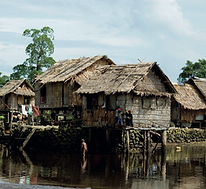


FLOATING ISLANDS
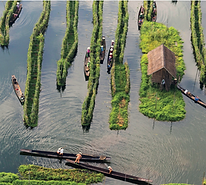
3. RITUAL ECOLOGY


DIKES, PONDS & CANALS


The Living Earth Curriculum is created by Julia Watson LLC and Melissa Hunter Gurney of The Omni Institute, based on the book ‘Lo-TEK, Design by Radical Indigenism’ by Julia Watson and The Omni Institute’s educational theory by Melissa Hunter Gurney.
Terms of Use